Facts About Wren Birds
Wren birds are fascinating little birds that capture the attention of birdwatchers and nature lovers alike. Despite their small size, they have big personalities and some surprising traits. As one of the most beloved UK garden birds, they’re often seen flitting about gardens, forests, and even urban spaces.
The wren garden bird sings loud and powerful songs. In fact, a wren song can often be louder than birds much larger than them.
The wren garden bird sing loud and powerful songs.
In fact, a wren song can often be louder than birds much larger than them.
Where Do Wrens Live
Wren habitat can include gardens and a variety of habitats, such as forests and grasslands to urban areas, they adapt easily to different environments.
What Does A Wren Look Like
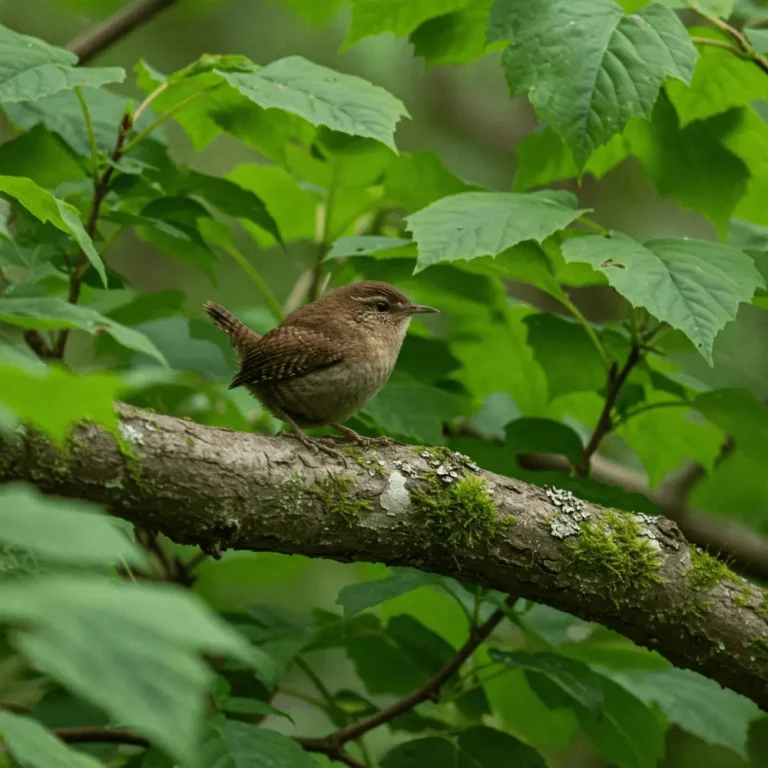
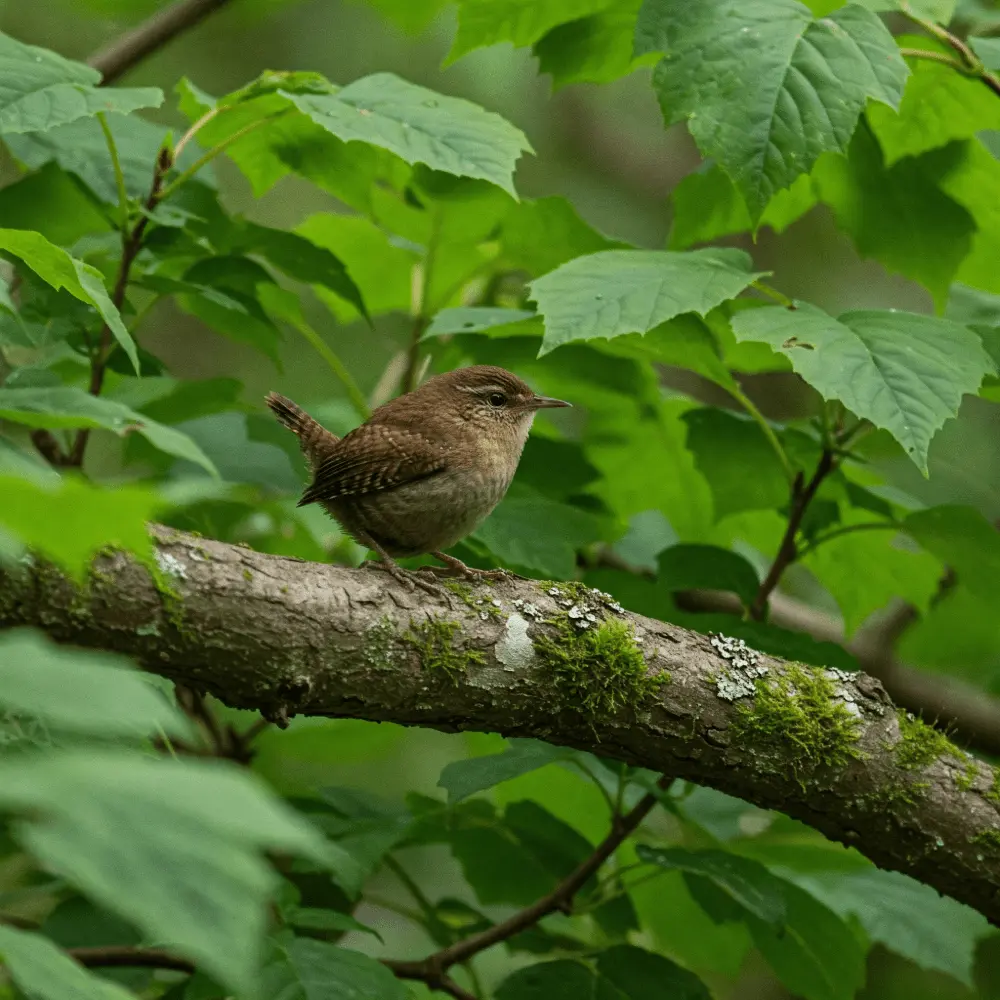
The wren bird is small and compact, with a round body, short tail, and slender beak.
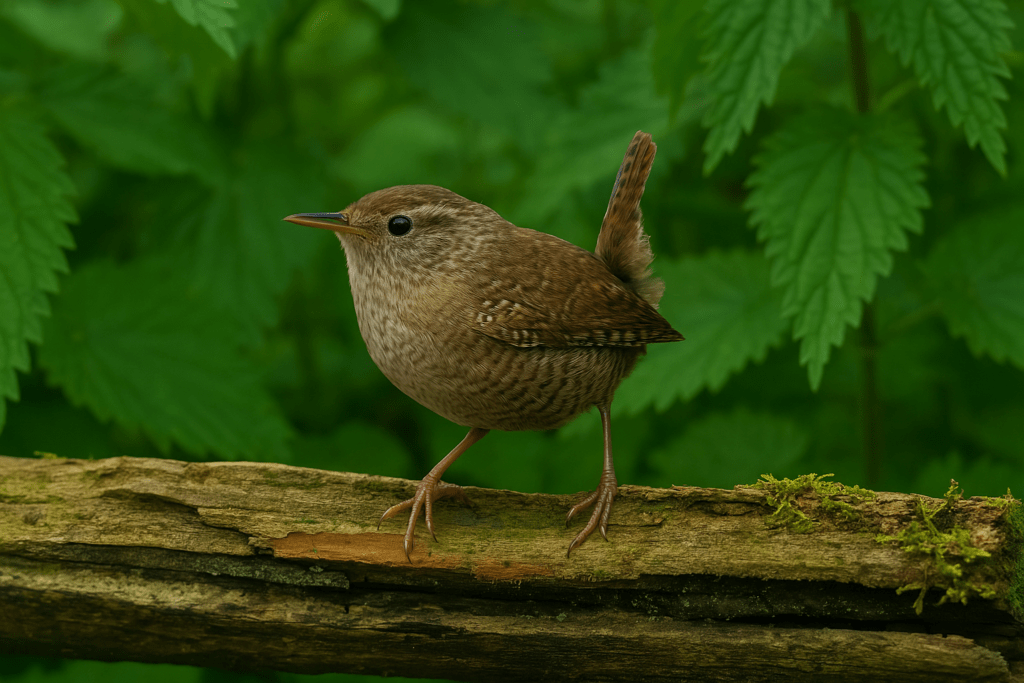
Wren birds typically have brown or greyish feathers, often with subtle streaks or spots, and their tiny size makes them look quite delicate as they flit about in search of food.
How Big Is A Wren
Wren bird size makes them among the smallest birds in the world, with most species measuring:
- 4 to 5 inches
- (10 to 13 cm) in length.
How Long Do Wrens Live
Wrens typically live for 2 to 5 years, although some can survive longer in the wild with proper conditions, such as plentiful food and free from predators.
How To Attract Wrens
If you love listening to cheerful bird songs, learning how to attract wrens to your garden is a wonderful idea.
These tiny, energetic birds bring life, music, and charm to any outdoor space.
1. Provide the Right Food
First of all, wrens love insects! They feed on spiders, caterpillars, beetles, and other small bugs. So, avoid using pesticides in your garden. For extra attraction, you can also offer mealworms, suet, or peanut butter in bird feeders.
2. Create Safe Nesting Spots
Next, wrens love cozy, hidden places to nest. Wooden birdhouses with small entrance holes are ideal. Place them in quiet, shaded spots away from predators. Even better, leave natural spaces like shrubs, brush piles, or dense hedges where wrens can feel safe.
3. Add Fresh Water
Of course, all birds need clean water. Wrens are no exception. A shallow birdbath or small fountain will encourage them to visit more often. Be sure to clean it regularly to keep the water fresh.
4. Grow Native Plants
Then, think about your plants. Native plants attract the insects wrens love to eat. They also offer shelter and protection. Consider planting wildflowers, shrubs, and berry bushes to create a natural wren-friendly environment.
5. Keep It Quiet and Safe
Finally, wrens prefer peaceful places. Keep pets, loud noises, and human traffic away from nesting areas. Also, avoid cutting down dead trees or branches — wrens often nest in natural cavities.
With these few simple changes, you can easily turn your garden into a favourite spot for wrens.
Wren Bird Meaning
Wren meaning refers to a small, lively bird often associated with agility and resourcefulness. Furthermore, it symbolizes joy and curiosity, as it swiftly navigates through dense foliage in search of insects.
Wren Spiritual Meaning
Wren spiritual meaning often represents creativity, adaptability, and freedom.
Moreover, the wren is believed to symbolize the power of communication, as its song is heard far and wide, reminding us to express ourselves freely.
- Celtic Animal Symbolism: In Celtic culture, birds like the wren were considered symbols of intelligence, communication, and creativity.
- Native American Symbolism: Many Native American tribes view birds as messengers or spiritual guides, with the wren often representing resourcefulness or protection.
- Modern Animal Symbolism: Contemporary interpretations of animal symbolism, which draw on qualities like agility, resourcefulness, and communication.
Wren Bird Symbolism
Wren bird symbolism represents energy, creativity, and resourcefulness. Additionally, the wren is often seen as a messenger, reminding us to stay agile and adapt to life’s challenges with grace.
What Do Wrens Eat
Wren diet primarily consists of insects, spiders, worms and other small invertebrates. Moreover, the house wren diet
can include seeds and berries, especially during colder months when insects are less abundant.
Wren Breeding Season
Wren breeding season begins in spring when males vigorously defend their territory and attract females with their energetic songs.
Additionally, females select a mate and work together to build a nest, ensuring a safe place for their upcoming brood.
Where Do Wrens Build Their Nests
Where do wrens nest ? Wrens nest are famous for their unique and creative nesting habits.
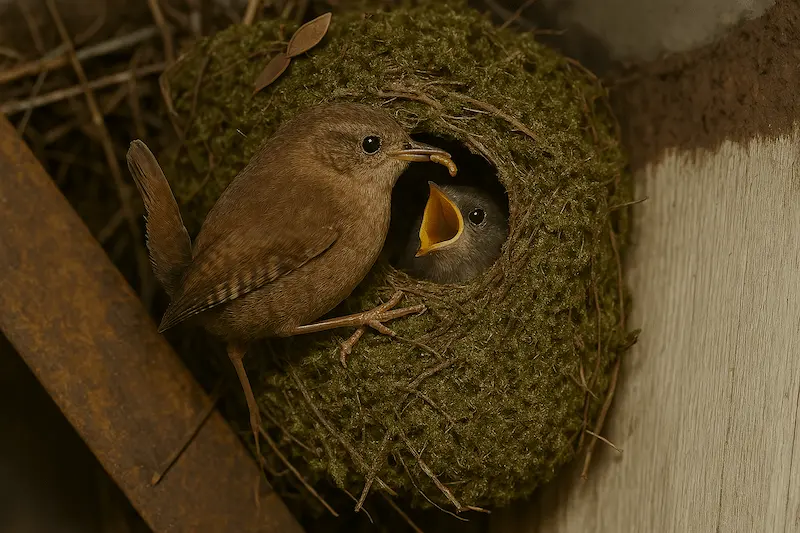
These small birds can be found in a variety of environments, and wrens nests reflect their adaptability. Typically, wrens choose areas that offer plenty of cover and protection from predators.
Wren Nesting Behaviour
Wren nesting behaviour is highly industrious, as a wrens bird nest is build intricate, well-hidden nests in dense shrubs or tree cavities and even farm buildings.
Do Wrens Use Nest Boxes
Wrens often use nest boxes, especially when natural nesting sites are scarce.
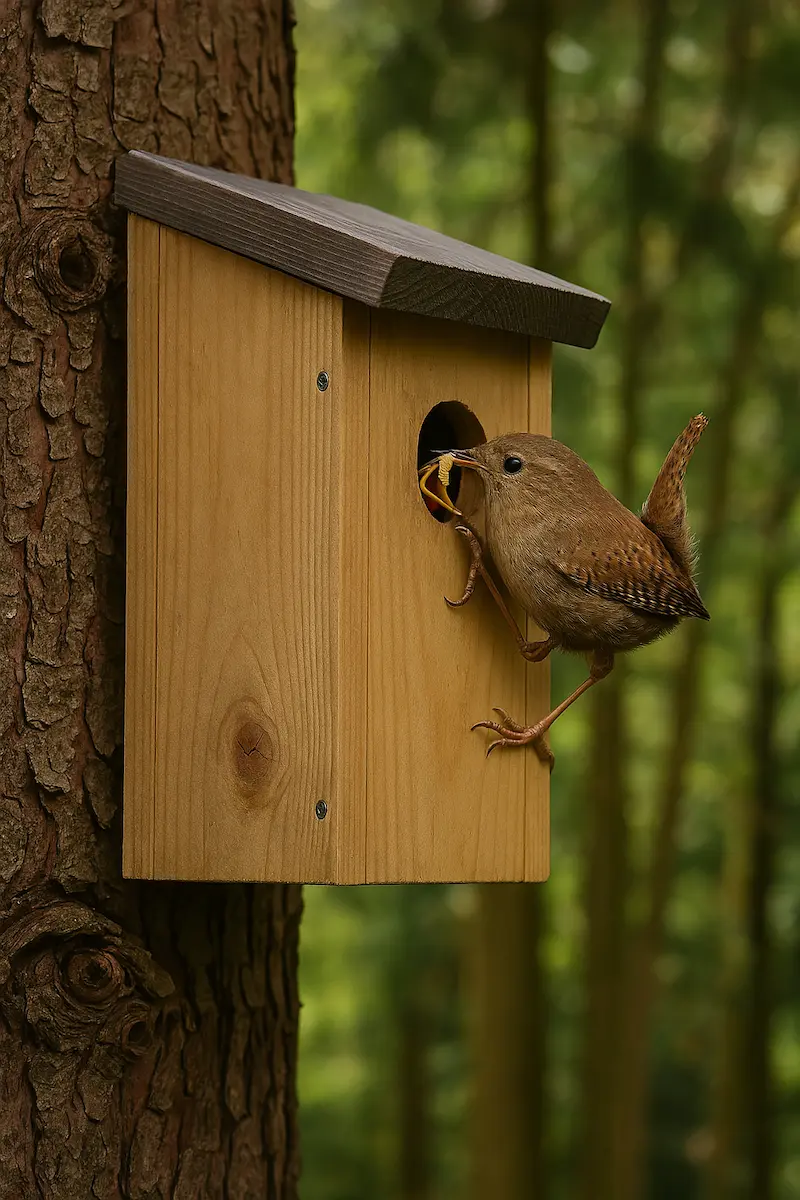
Furthermore, they readily adapt to these man-made wren bird house, building their nests inside using twigs, grass, and feathers for insulation and protection.
Wren’s Nesting Season
Wren nesting season starts in early spring when both males and females actively search for suitable nesting sites.
Wrens bird nest are one of the most impressive aspects of wrens is their ability to build intricate nests.
They use twigs, leaves, and other materials to create a cozy home.
Some wrens are even known to build multiple nests to attract mates. Their nesting behaviour is a clear sign of their resourcefulness and skill.
How Many Eggs Do Wrens Lay
Wrens typically lay between 4 to 7 eggs during each breeding season. Additionally, they usually lay their eggs in a single clutch, which the female incubates while the male helps by guarding the nest.
Baby Wren Bird
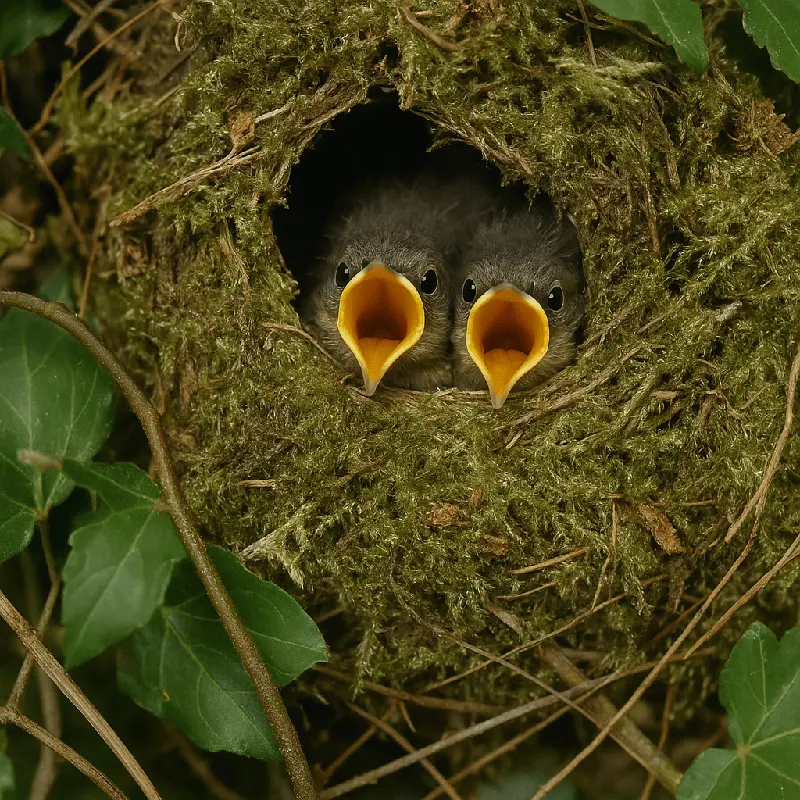
Wren chicks wait eagerly in their cozy, moss-lined nest. With their beaks wide open, they call out for food, hoping to catch their parent’s attention.
What Do Baby Wrens Eat
Baby wrens eat insects, spiders, and worms. Parent wrens feed them high-protein food to help them grow healthy and strong.
How Long Do Wrens Stay In The Nest
Wrens typically stay in the nest for about 12 to 18 days after hatching, depending on the species, before they fledge and leave to begin their independent lives.
Species Of Wrens
There are over 40 different species of wrens found worldwide.
Each wren species has its own unique traits, but all share the same energetic personality.
Do Wrens Migrate
Wrens are fascinating little birds, and many people wonder if they migrate when the seasons change.
In fact, whether or not wrens migrate depends on the species and where they live.
For example, in the UK, Eurasian Wrens usually stay all year round. They are resident birds, which means they don’t travel far from their home territory.
However, in colder parts of Europe or North America, some wrens do migrate.
As winter approaches, these birds leave harsher climates and move to warmer, more sheltered areas. This behaviour helps them survive when food becomes scarce.
Interesting Facts About Wrens
Fun facts about wrens show just how amazing these tiny birds really are!
Wrens Sing Loudly for Their Size
Male wrens use their powerful voices to defend their territory and attract a mate. Some can sing up to 700 times a day!
Male Wrens Build Several Nests
Instead of just one, male wrens build multiple nests. The female then picks her favourite before laying her eggs.
Wrens Are Tiny but Fierce
Don’t let their size fool you — wrens bravely chase away much larger birds that enter their territory.
Some Wrens Migrate, Others Stay Put
In colder regions, wrens migrate to warmer places for winter. But many stay in the same area all year if the climate is mild.
Wrens Nest in Unusual Places
Wrens love small spaces! They often build nests in garden sheds, old boots, bird boxes, or even inside unused teapots.
And finally the Wren is simply an amazing little bird.
About the Author